🐍 Is It Ethical to Keep a Reptile as a Pet?
Short answer: it depends.
Long answer: pull up a chair, because this one deserves nuance.
At Scaly Safari, we’re asked this question a lot — sometimes gently curious, sometimes pointed, sometimes with a raised eyebrow and a tone that says “go on then, justify yourself.”
And honestly? We welcome it.
Because if you’re asking whether it’s ethical to keep a reptile as a pet, that already tells us something important about you: you care.
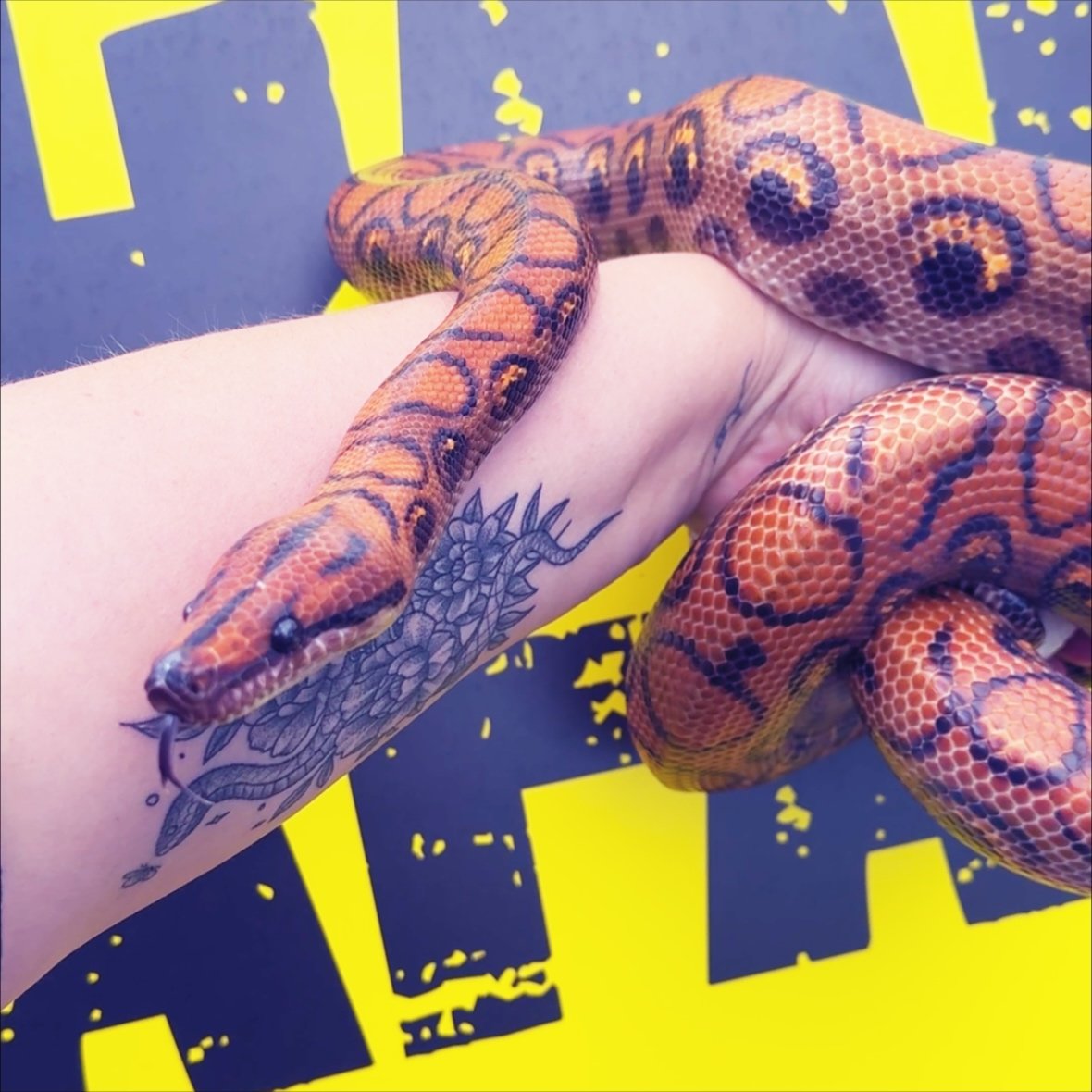
Apollo - our beautiful Brazilian rainbow boa
🌍 Let’s Start With an Uncomfortable Truth
Not all reptile keeping is ethical.
There. We said it.
Some reptiles are:
Bred irresponsibly
Sold to unprepared owners
Kept in enclosures that don’t meet their basic needs
Treated like ornaments rather than living beings
And that’s not okay — not for the animals, and not for the humans who end up overwhelmed, guilty, or heartbroken when things go wrong.
But here’s the other truth that often gets lost in the shouting:
👉 Ethical reptile keeping does exist — and when done properly, it can be genuinely welfare-positive.
🦎 What Do We Mean by “Ethical” Reptile Keeping?
For us, ethical reptile keeping means asking questions like:
Does this species thrive in captivity — or merely survive?
Can we realistically meet its needs for its entire lifespan?
Are we choosing animals that are captive bred, not wild-caught?
Are we willing to change our behaviour for their welfare?
Ethics isn’t about perfection.
It’s about informed responsibility.
🧠 Reptiles Are Not Tiny Dogs (And That’s Okay)
One of the biggest ethical mistakes people make is assuming reptiles want the same things mammals do.
They don’t.
Most reptiles:
Don’t crave affection
Don’t want constant handling
Don’t need entertainment
What they do need is:
Correct heat, light, and UVB
Appropriate space and environmental complexity
Species-appropriate diets
Predictability, not chaos
Handled respectfully and kept properly, many species show lower stress levels in captivity than they would in the wild — where food scarcity, predators, parasites, and injury are constant threats.
That doesn’t make captivity automatically “good”.
But it does complicate the idea that it’s automatically bad.
🐢 “But Shouldn’t Reptiles Be Free?”
This is where things get philosophical.
Yes — reptiles belong in the wild.
But the reptile you see in a responsible home today?
They were almost certainly:
Bred in captivity
Several generations removed from the wild
Unable to survive if released
Releasing captive reptiles is not ethical.
Supporting poor breeding practices is not ethical.
Ignoring welfare because “it’s just a reptile” is definitely not ethical.
But caring for a captive-bred animal responsibly, for its whole life, with its needs fully met?
That’s not exploitation.
That’s stewardship.
🏛️ Where Responsible Reptile Keeping Comes In
This is exactly why we’re proud members of Responsible Reptile Keeping.
RRK advocates for:
Evidence-based husbandry
High welfare standards
Education over gatekeeping
Honest conversations about which species should and shouldn’t be kept
We don’t believe in “everyone should have a reptile.”
We believe in “the right people, keeping the right species, in the right way.”
And sometimes the most ethical answer is: this animal isn’t right for you — and that’s okay.
🚫 Ethical Reptile Keeping Also Means Saying No
One of the most ethical things we do at Scaly Safari is discourage ownership when it’s not a good fit.
Some reptiles:
Are too delicate
Too stress-prone
Too large
Too specialised
For example - we are often asked if a chameleon is a good pet for a child, and our answer is always ‘no’. Chameleons are a delicate species, with highly specific care requirements (plus…the vast majority don’t enjoy being handled). They may look awesome - but that doesn’t mean they make awesome companions in all circumstances.
Loving reptiles doesn’t mean owning one.
Sometimes the most ethical choice is:
Interacting with (and learning about) animals through experiences (like ours)
Supporting conservation
Learning without taking responsibility for a life
And we fully support that.
Ps… If you’re considering getting a reptile as a pet for your child but not sure which one is a good (and responsible) fit, we made a free quiz to help you decide. It may just save you the heartache of ending up with the wrong animal 💚
🧠 Ethics Is Not the Same as Perfection
There’s something we need to say — gently, but clearly:
Ethics should never be confused with perfectionism.
Even the most well-intentioned reptile keeper will make mistakes.
We certainly have.
Husbandry advice evolves. Research changes. Best practice shifts. What was considered “correct” ten years ago may now be outdated — and that doesn’t make past keepers unethical, it makes them human.
Ethical reptile keeping isn’t about getting everything right, all the time.
It’s about what you do when you realise something could be better.
Do you:
Learn and adjust?
Seek better information?
Change your setup when new evidence appears?
Put the animal’s welfare ahead of your ego?
That mindset matters far more than ticking every box on a care sheet.
💚 Self-Compassion Is Part of Ethical Keeping
If ethics turns into fear — “What if I’m doing it wrong?”
If it becomes shame — “I should have known better.”
If it paralyses people into inaction or secrecy…
Then it’s stopped being ethical and started being harmful.
You will make decisions you later rethink.
You will miss things.
You will have moments you wish you’d handled differently.
That doesn’t disqualify you from being an ethical keeper.
What does matter is:
Willingness to reflect
Openness to learning
Commitment to doing better next time
Ethics is not a fixed checklist carved into stone tablets.
It’s a living, breathing practice — just like good husbandry itself.
🦎 Ethics Is a Direction, Not a Destination
We don’t believe in “perfect” reptile keepers.
We believe in:
Curious keepers
Humble keepers
Keepers who care enough to keep learning
Ethics isn’t about never slipping up.
It’s about the direction you’re facing when you notice you’ve slipped.
And if you’re reading posts like this, asking hard questions, and caring enough to reflect?
You’re already doing better than you think.
🦎 So… Is It Ethical to Keep a Reptile as a Pet?
Here’s our honest answer, based on our current level of understanding and experience:
✔️ Yes — when it’s done responsibly, knowledgeably, and species-appropriately.
❌ No — when animals are treated as novelties, decor, or impulse purchases.
Ethics isn’t a label you slap on after the fact.
It’s a commitment you make every single day of that animal’s life.
💚 Our Final Thought
Reptiles don’t need us to love them loudly.
They need us to understand them properly.
If you’re willing to:
Learn
Adapt
Respect boundaries
Put welfare first
Then keeping a reptile can be ethical — and deeply meaningful.
And if you’re not there yet?
That’s not a failure.
That’s ethics doing its job.
A Note FROM SCALY SAFARI
Scaly Safari is a proud member of Responsible Reptile Keeping (RRK) — a UK organisation dedicated to evidence-based husbandry, ethical decision-making, and improving welfare standards for reptiles in captivity.
If you’d like to explore the wider conversation around responsible reptile ownership, we highly recommend visiting their website and resources.