My Child Has Lost Interest in Their Reptile — Is That Normal?
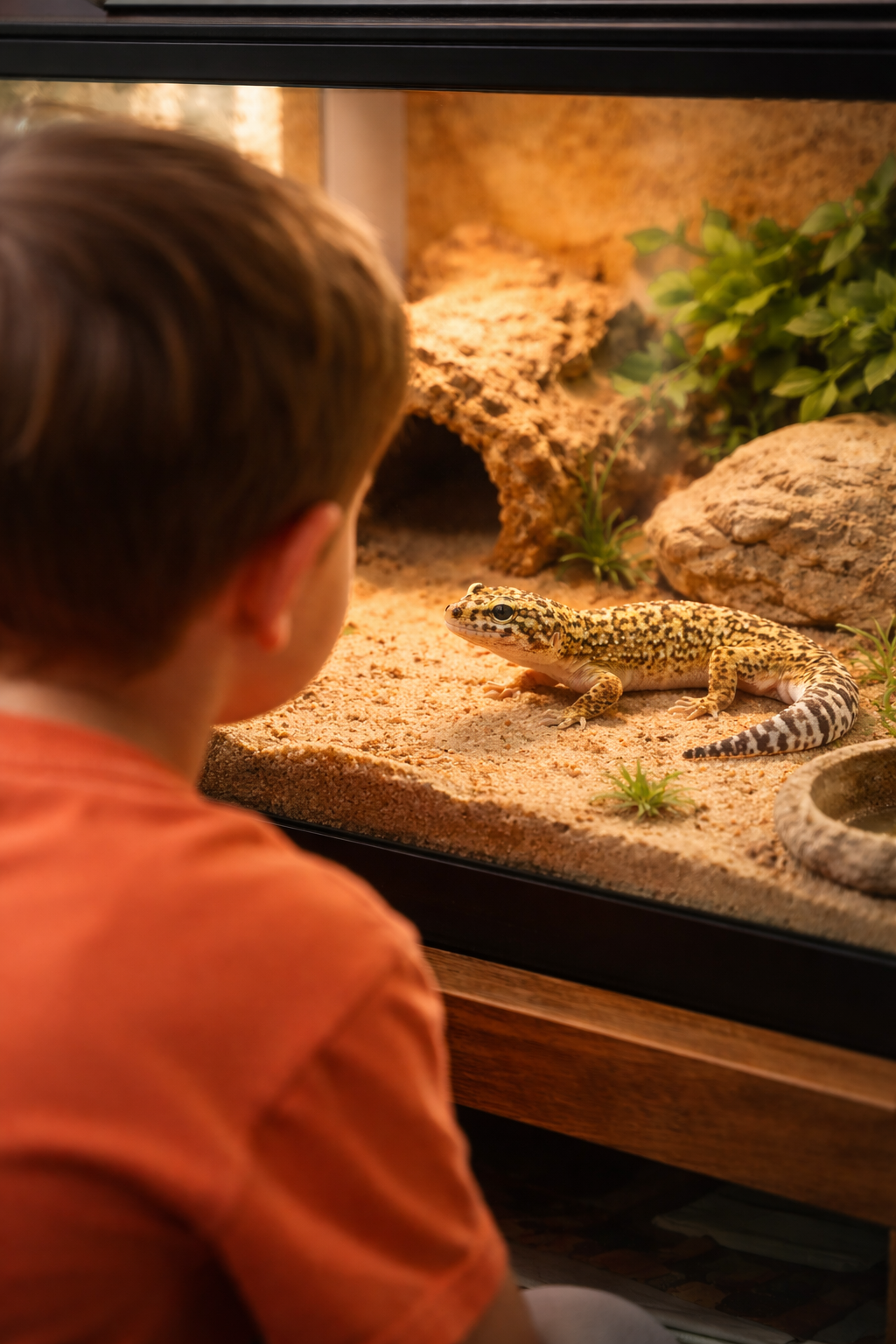
Short answer?
Yes. Very.
And if you’re reading this with a knot in your stomach, wondering whether you’ve made a mistake — take a breath. You’re not alone, and nothing has gone “wrong”.
This is an extremely common point in the reptile journey, especially in the weeks after Christmas.
Why this happens (and why it’s not a failure)
Reptiles aren’t like dogs, cats… or Christmas toys.
They:
sleep for long stretches
don’t seek attention
don’t perform on demand
often hide more while settling in
For a child, the first few days are exciting.
Then reality arrives: the reptile doesn’t “do” much, school starts again, routines return — and interest naturally dips.
That doesn’t mean your child doesn’t care.
It means the expectation didn’t match the animal.
And that mismatch is incredibly common.
The bit no one says clearly enough
In most families, adults do the care.
That’s not a parenting failure.
That’s just how reptile keeping actually works.
Children can:
help with feeding (with guidance)
observe
learn responsibility gradually
But reptiles depend on consistent adult oversight, especially in the early months.
If that responsibility has landed heavier than you expected — you’re not doing it wrong. You’re just now seeing the full picture.
What matters most right now
Three things — and they’re all manageable:
The setup is correct
Heat, lighting, hides, and space matter far more than constant interaction.Care is boringly consistent
Reptiles thrive on routine, not enthusiasm.Pressure is removed
From you and your child. Guilt helps no one — least of all the animal.
A child losing interest does not automatically mean the reptile is unhappy or neglected. It just means the novelty phase has passed.
If you’re feeling regret (this part matters)
Regret doesn’t make you irresponsible.
It means you care enough to reflect.
What matters now isn’t the decision you made — it’s what you do next.
And there are always options:
learning more
simplifying care
getting reassurance
or asking for help before things spiral
Gentle next steps (no pressure)
Not sure what you’ve got or whether it’s right for your family?
Our Which reptile is right for my child? quiz helps you think this through calmly.If you’re committed but overwhelmed:
Our Starter Kits walk you through care step by step, without jargon or judgement.If you’re anxious and need a human conversation:
A ScalySidekick consultation can help you regain confidence and make a plan.
And if the answer right now is simply: “I need to pause and stabilise” — that’s okay too.
One last thing
Reptiles don’t need constant attention.
They need informed, steady care.
If you’re here, reading this, asking questions — you’re already doing better than you think.
You don’t need to be perfect.
You just need to be willing to learn.